Was Heated Rivalry Worth the Watch?
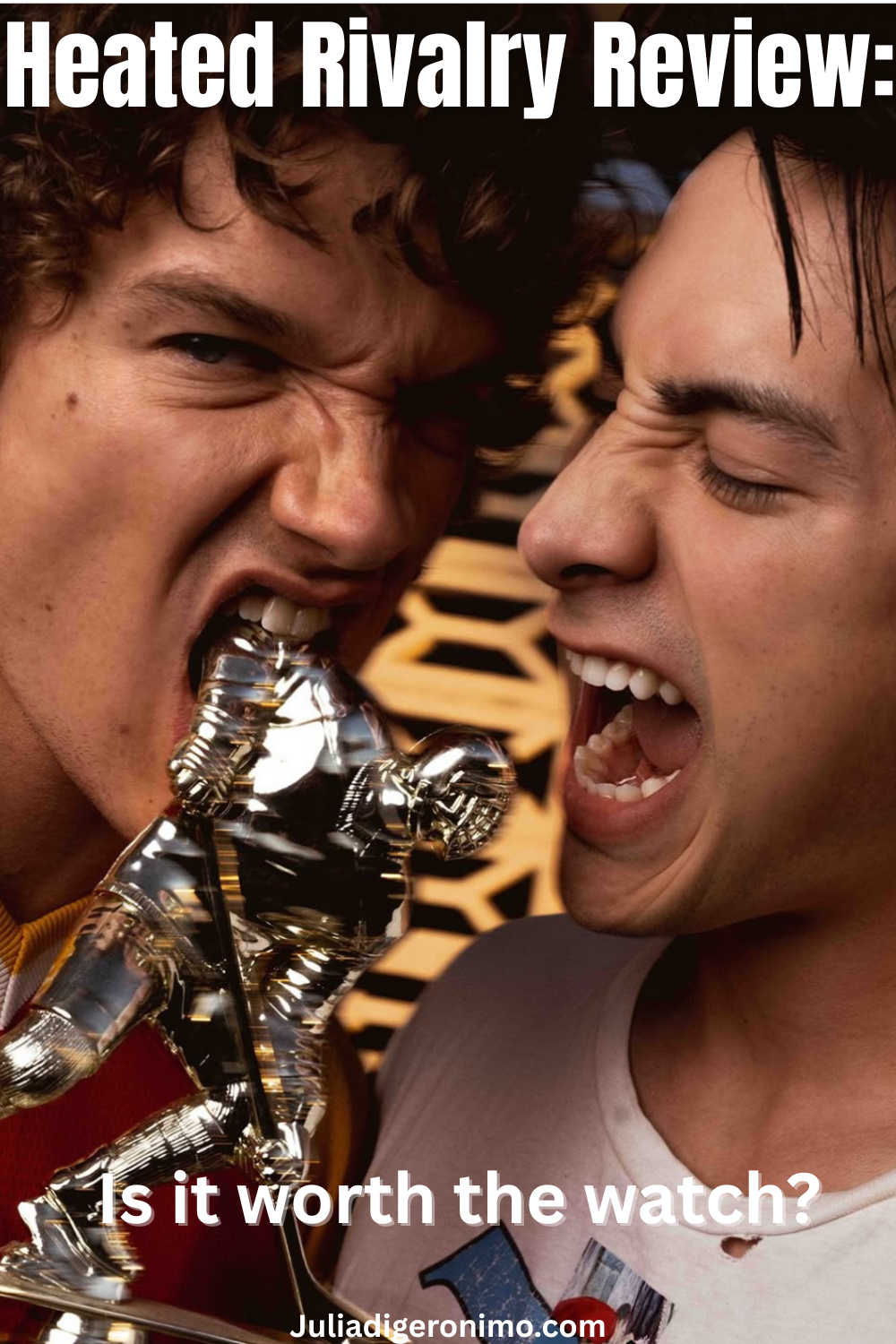
YAS DUH
5/5 STARS
Heated Rivalry: Should you Read it ,Watch it, or Both?
I’m not shy about the books I like to read. I don’t pretend to be a classics girl nor do I try to only read mature literary fiction. I spread my reading taste wide and read a variety of books, which always has to include at least one slutty romance book a month.
As a girl who grew up on fan fiction, my heart will always belong to ridiculous gay romance stories with unrealistic plotlines and characters. I’ve always been a fan of a regular romance, but it wasn’t until 2023 that I found the world of gay hockey romance novels.
I was in the midst of my first serious relationship breakup, and as a reader does, I needed a book to drown my sorrows in.
Somehow, I came across a book called The Long Game by Rachel Reid, and unfortunately, I’ve never been the same since.
This book was the last book of a six-book series, and I found myself headfirst in it. After two years, I can’t count how many times I’ve read the series.
Something about men showing emotions mixed with the excitement of hockey hooked me. I won’t lie, the book is filled with sex scene after sex scene, but one thing is for sure, Rachel Reid does not write plotless porn.
The intricate relationships Reid created in this series, and the way these men navigate sexuality, weave an emotionally addictive story.
Book to Movie…
Book two of the series, Heated Rivalry, is now a TV show, and the first two episodes came out on November 28.
This series becoming a TV show is any niche reader’s dream. I can’t tell you how many times I’ve read some random series that I had to scour the internet to find a copy to read, and hoped it would become a show or movie. And now here we are.
You know I love to hate a book-to-screen adaptation, so here is my honest review of the Heated Rivalry TV show.
Overall Adaptation
The book spans over 10 years, following the two main characters, Shane Hollander and Ilya Rozanov.
When we meet Hollander and Rozanov, they are hockey’s most anticipated players about to enter their debut season. From the moment they’re drafted, the media pits them against each other as rivals, instantly lighting the tension between the two.
After their first meeting, followed by some tense interactions, the two boys kiss, leading to a decade-long relationship of sneaking around, quick hookups, and many unsaid emotions.
The show was split into six episodes, and while I would have loved 20 episodes, the timeline worked.
Heated Rivalry creator Jacob Tierney reworked Rachel Reid’s novel to fit expertly on the TV screen. The book is a constant time jump, with the boys only going months, sometimes years, between seeing each other. I think Tierney structured the show well to work with these time jumps without making the show feel clunky.
The show relied heavily on montages, and I think this helped us watch the progression of their relationship and hockey career over the years without feeling like we were missing something.
Not once did I feel like the original story was lost or misconfigured. It’s clear that the creators and team worked hard to keep the original book’s bones and structure.
Another element that worked well for the show was the texting sequences. Much of Shane and Ilya’s relationship is spent away from each other. Showing their text exchanges gave the viewers another layer to the relationship. It also allowed the show to leave a lot of things unsaid and up to interpretation.
In the book, Shane and Ilya are both very internal characters. A lot of book-to-media adaptations struggle because they can’t rely on the constant narration that books usually provide. While some shows, like The Summer I Turned Pretty, add a narrator to the show to fill in those missing elements, Heated Rivalry relied on elements like the texting exchanges and montages to show us what the characters are feeling.
When I say shows us, actors Hudson Williams and Connor Storrie do an amazing job using facial expressions and body language to show the story instead of relying on words.
Characterization and Actorization
Our two main stars, Shane and Ilya, are played by Hudson Williams and Connor Storrie.
Shane is an awkward character who never knows exactly what to say and is always stuck in his head.
Though the book is in third person, it is mostly centered around Shane’s point of view, allowing us to see his constant internal battles.
Shane’s character sometimes falls flat in the book because he seems to lack depth and personality.
Williams took this role and expertly showcased who Shane was. Hudson’s facial expressions and clear understanding of the character allowed him to add depth to Shane that we don’t necessarily see in the books.
Williams was very intentional with his role. We see this in moments like the bathroom scene post Hockey Awards. In the book, we don’t see much of how deeply Shane is feeling, but in the show, Williams wanted the viewer to see how torn up Shane is about this relationship.
While he might be saying one thing, the viewer could see clearly that Shane was feeling the opposite of that. His tears and the way he instantly succumbs to Ilya show the viewer how infatuated Shane really is.
Ilya is the opposite of Shane. He is confident, cocky, and seems to always know what to say. However, unlike Shane, where we can see how deeply he feels things, to the watcher, Ilya seems to care only about sex and hockey.
Storrie took Ilya and added a layer to him, showing the viewer that this cocky personality is a defense mechanism. Instead of being shallow and emotionless, Storrie portrayed a character who feels so much yet hides it behind a wall.
In the same scene, we see Ilya being his usual self-assured self. Despite seeming like he doesn’t care, Storrie’s face seems to show how much of an act this persona is.
We also see this later on in the episode, after Shane leaves Ilya’s room. When Shane says goodbye from outside the room, Ilya is sitting very still on his bed with a very blank look on his face. This is a face we only see on Ilya when he is alone. This is another way that Storrie tries to illustrate how much Ilya is feeling without him saying anything.
The book relies on statements and tells the reader what is going on, while the show is a constant example of showing instead of telling. Because the show isn’t narrated, we needed actions and body language to explain what the characters were feeling, and Williams and Storrie did exactly that.
I really enjoyed reading the book and then seeing how the actors chose to display their characters’ feelings without outright saying them. I think this is one of the show’s strongest points.
Changes and not changes
The creators made tasteful changes that allowed them to adapt the story to the screen. I appreciate it when the creators of a show use the book not as a loose idea, but as a blueprint.
The show also expanded on many elements that Reid softly touched on.
Two big examples are Shane’s experience as an Asian Canadian and Ilya’s abusive family.
Shane’s Japanese culture is mentioned very briefly in the book, but it isn’t a key part of his character.
Instead of ignoring this element, Jacob Tierney explained how important he felt emphasizing Shane’s background was.
I think this was an important change because many authors will change the race of a character to diversify without adding actual characterizations relating to race. This is how we end up with nonwhite characters lacking thought-out plots used only to hit a diversity quota.
I appreciated not just the attention to detail Tierney had, but also how he spoke about why he strengthened this aspect of Shane. Writers need to create accurate and researched characters that contribute to the storyline.
Moving on to Ilya, the book includes his tremulous relationship with his family, but the show explores this relationship more deeply.
Ilya’s family still lives in Russia and is financially dependent on him. Though we don’t get much information on Iyla’s homelife before he’s drafted, the reader can see the abusive tendencies from Ilya’s father and brother.
By further illustrating Ilya’s lack of support, we understand why he puts up so many walls and how important it is that he lets Shane in.
I really loved how they used the montage in episode four to juxtapose Ilya and Shane’s personal lives. We see how Ilya’s time away from hockey consists of sex, partying, and being subjected to his family, while Shane’s time off is spent with friends and family who support him.
Adding a deeper plot line here gives us more insight into Ilya and helps us prepare for the next season when we see their second book, The Long Game.
In my Red, White, and Royal Blue blog, I spoke about the ridiculous and frivolous changes that altered the story.
In that movie, I felt like the creators closed their eyes and chose random elements from the story to delete and rewrite. This infuriated me because the changes altered the characters and plot, almost creating a different story.
The Daisy Jones and the Six adaptation is a good example of how changes can help the show.
I want to emphasize I’m not against changing elements and structure, but I struggle when the changes negatively affect the show.
Feelings
I CANNOT express how this show made me feel. From the first to the final episode, I was absolutely beside myself. I had butterflies and anxiety all at once watching Williams and Storrie portray an epic modern-day queer Romeo and Juliet.
For their entire careers, Shane and Ilya are pitted against each other. I loved this forbidden romance element of the story.
The show’s main goal is to illustrate the toxicity in male professional sports and how unsafe and unwelcoming an environment they are for anyone who isn’t a white straight man.
The NHL is currently attempting to ride the coattails of the show and act as if it supports queer athletes. It’s extremely important to hold professional sports accountable and not settle for blatant homophobia. It shouldn’t be normal that professional male sports are only meant for straight athletes, and we need to continue resisting this status quo.
In the final episode, the character Scott Hunter talks about how exhausting his life was when he was hiding his sexuality. This scene and character overall expertly illustrate why staying in the closet is so detrimental to a person’s life, and why toxic sport environments are harmful and dangerous.
As someone who hates male sports, I think if they all started tonguing at least once per game, viewership would increase vastly.
The show doesn’t skate around homophobia in sports and doesn’t pretend that professional hockey isn’t filled with toxic masculinity.
The NHL is the only male professional sport without an out player; the book/show works hard to show how harmful it is to players.
Final Thoughts
My final thoughts are that I’m so glad this season is over because I need to focus on something else. I have been completely consumed by this show and am ready to step out of this fog. I can’t wait for season two.
I hope you like the blog!
